
ArsenalPC

RX 9070 XT vs RTX 5070 Ti: 5% Performance Gap, 20% Price Gap: Which Should Power Your Next Build?

gaming PC cable management — custom ArsenalPC build with expert cable routing in Willoughby Ohio
Our Expert
Seva Grigorenko
PC Hardware Specialist

5+ years of experience building and testing gaming systems. Works directly with components for performance validation, benchmarking, and build quality assurance.

5+
Years of Experience

Quick View

OUR EXPERT
Michael Khaykin Co-Founder & Head of PC Testing

Co-founder of ArsenalPC with PC industry experience dating back to 1997. Works with the testing team on performance, reliability, and build quality.

30 YEARS OF
EXPERIENCE
Last Edited By: Seva Grigorenko Last Updated April 27, 2026 Share

What You’re Actually Comparing

This matchup sits closer than most GPU comparisons. The RTX 5070 Ti and the RX 9070 XT are both upper-midrange cards targeting 1440p and 4K gaming, separated by roughly 5% in average rasterization performance and $150 in MSRP. That combination makes the decision genuinely interesting, not a straightforward win for either side. Nvidia launched the RTX 5070 Ti on February 20, 2025, at a $749 MSRP. There is no Founders Edition; every unit comes from an AIB partner such as ASUS, MSI, or Gigabyte. AMD followed two weeks later, launching the RX 9070 XT on March 6, 2025, at $599 MSRP. AMD also skipped a reference card, so the 9070 XT is likewise AIB-only across the board.
5%

Average Raster Performance Gap

Across TechSpot’s 55-game benchmark suite at both 1440p and 4K, the RTX 5070 Ti leads the RX 9070 XT by just 5% on average.

$150

MSRP Price Difference

The RX 9070 XT launched at $599 versus $749 for the RTX 5070 Ti, a $150 spread that represents roughly 20% more spend for the Nvidia card.

65%

Games Within 10% Either Way

In 36 of 55 tested titles, the margin between the two GPUs was 10% or less, meaning nearly two-thirds of games are a practical coin flip.

The Price Context

The $150 MSRP gap between these two cards represents roughly a 20% premium for the 5070 Ti over the 9070 XT. To put that in generational context, the RTX 5070 Ti actually undercuts the card it replaced: the RTX 4070 Ti Super launched at $799, so Nvidia came in $50 lower this cycle. AMD’s $599 entry point, meanwhile, has driven strong demand, with AMD’s CEO describing the 9070 XT as a fantastic success with roughly 10x the sales volume of the previous generation. Neither card is a budget option. Both are serious investments aimed at buyers who want high-refresh 1440p or capable 4K output. The question this article answers is whether the 5070 Ti’s performance advantage, real but narrow, justifies paying that 20% premium in a configured system.

What This Comparison Covers

The sections below draw on a 55-game benchmark suite, corroborated by data from Gamers Nexus, Hardware Unboxed, and TechSpot, alongside ArsenalPC‘s own build experience. The focus is raster performance, because that is where the vast majority of gaming hours land. Ray tracing, upscaling, and feature-set differences each get their own treatment, because those factors shift the calculus for specific use cases.

Featured Prebuilt Systems

Updated monthly
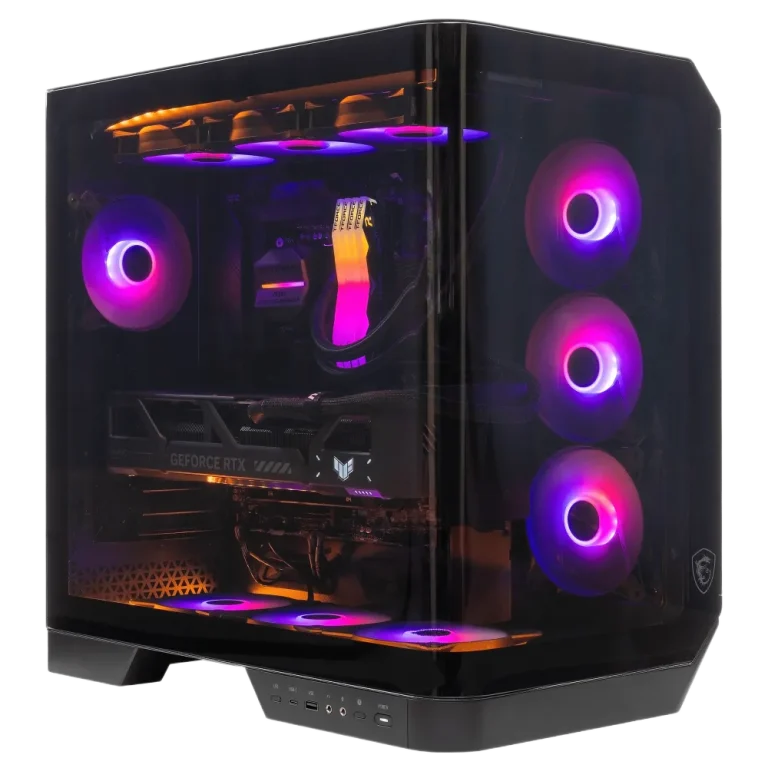
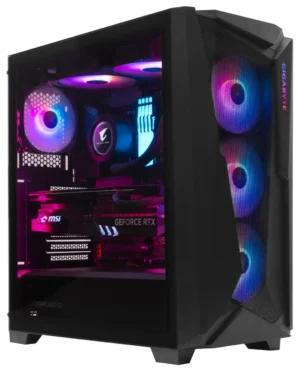
MAG PANO 120R PZ, Radeon RX 9070 XT 16GB, Ryzen 7 9800X3D

Best Value, RX 9070 XT

MAG PANO 120R PZ, Radeon RX 9070 XT 16GB, Ryzen 7 9800X3D, DDR5 32GB, 1TB NVMe SSD, Gaming PC

$2,999.00
See details
View Pros & Cons
The good
  • Ryzen 7 9800X3D pairs perfectly with the RX 9070 XT for 1440p gaming
  • Strong raster performance within 5% of the RTX 5070 Ti at a lower system price
  • 32GB DDR5 and 1TB NVMe SSD cover current and near-term gaming needs
  • FSR 4 upscaling delivers credible image quality for most gaming workloads
The trade-offs
  • Ray tracing trails the RTX 5070 Ti, especially in demanding RT-heavy titles
  • No DLSS 4 Multi-Frame Generation support
  • 1TB SSD may feel tight for large modern game libraries
Bottom line The best-value 1440p prebuilt for raster-focused gamers who want top-tier AMD performance without the RTX 5070 Ti premium.
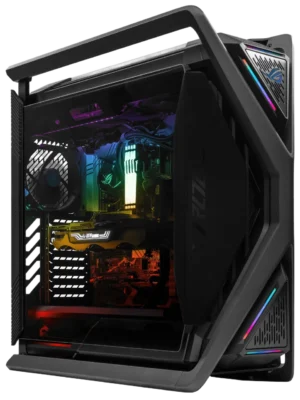
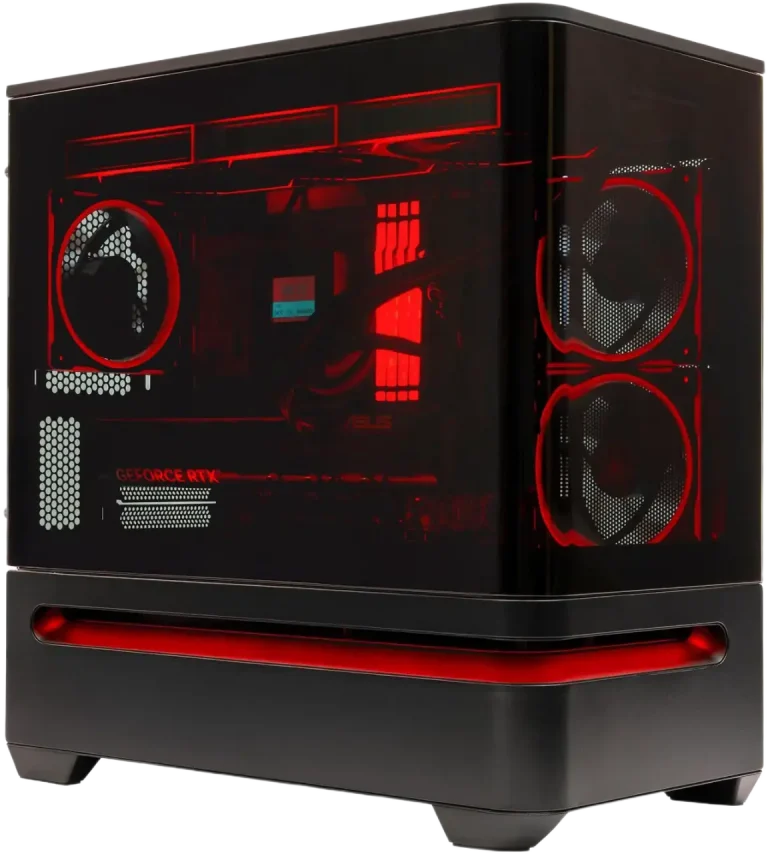
ASUS Prime AP202, Radeon RX 9070 XT 16GB, Ryzen 9 9950X3D

High-End AMD Build, RX 9070 XT

ASUS Prime AP202, Radeon RX 9070 XT 16GB, Ryzen 9 9950X3D, DDR5 32GB, 1 TB NVMe SSD, Gaming PC

$3,210.00
See details
View Pros & Cons
The good
  • Ryzen 9 9950X3D is AMD’s flagship CPU, exceptional for gaming and productivity
  • RX 9070 XT delivers strong 4K raster performance at a competitive system price
  • ASUS Prime chassis offers clean aesthetics and solid airflow
  • Excellent platform longevity on AM5
The trade-offs
  • Premium CPU cost may outpace GPU in pure gaming scenarios vs. 9800X3D builds
  • RT performance still trails the RTX 5070 Ti in demanding workloads
  • 1TB SSD is modest for a system at this price point
Bottom line For buyers who want AMD’s best CPU and GPU in one system, this build maximises the RDNA 4 + Zen 5 platform without crossing into RTX 5070 Ti territory.
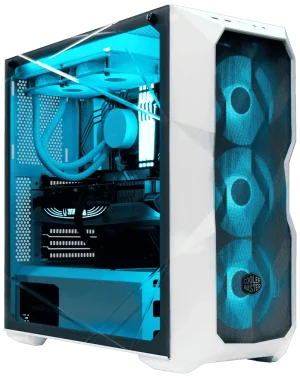
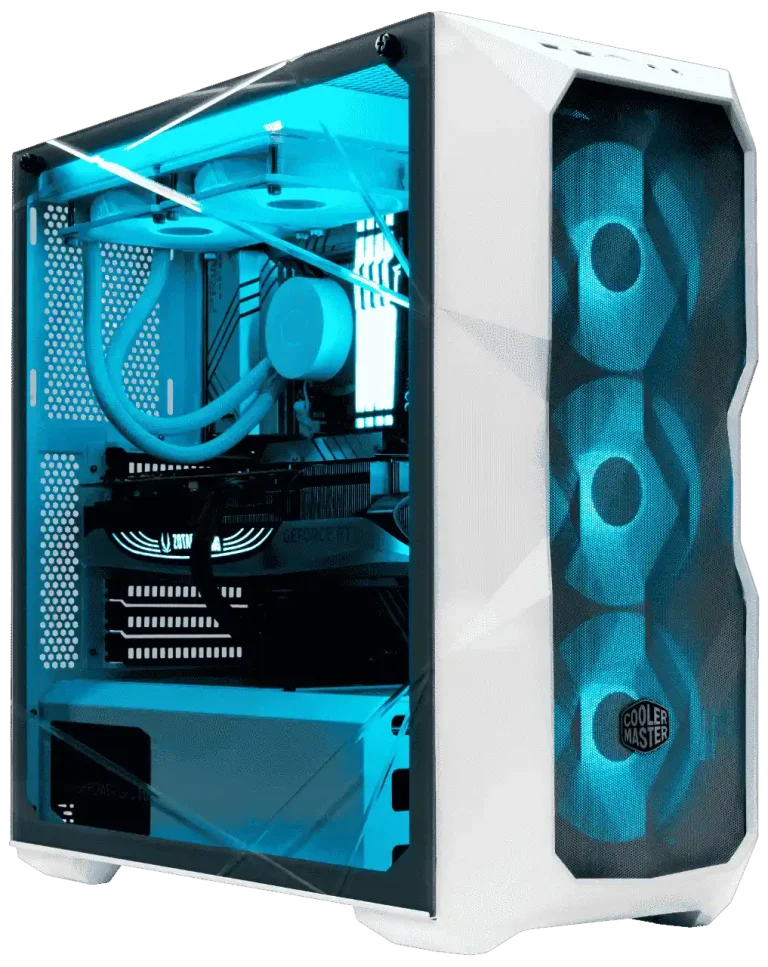
MasterBox TD500 Mesh White, GeForce RTX 5070 Ti 16GB, Intel i9-14900KF

Best Value, RTX 5070 Ti

MasterBox TD500 Mesh White, GeForce RTX 5070 Ti 16GB, Intel i9-14900KF, DDR5 64GB, 4 TB NVMe SSD, Gaming PC

$3,734.00
See details
View Pros & Cons
The good
  • RTX 5070 Ti delivers the best raster and RT performance in this comparison
  • DLSS 4 Multi-Frame Generation exclusive to Blackwell, no AMD equivalent
  • 64GB DDR5 and 4TB NVMe SSD offer exceptional headroom for content creators
  • TD500 Mesh White case provides excellent airflow for sustained 300W loads
The trade-offs
  • Significant price premium over equivalent RX 9070 XT prebuilts
  • i9-14900KF is a previous-gen Intel CPU, less future-proof than AM5 platforms
  • Performance delta over the 9070 XT does not match the price delta in most titles
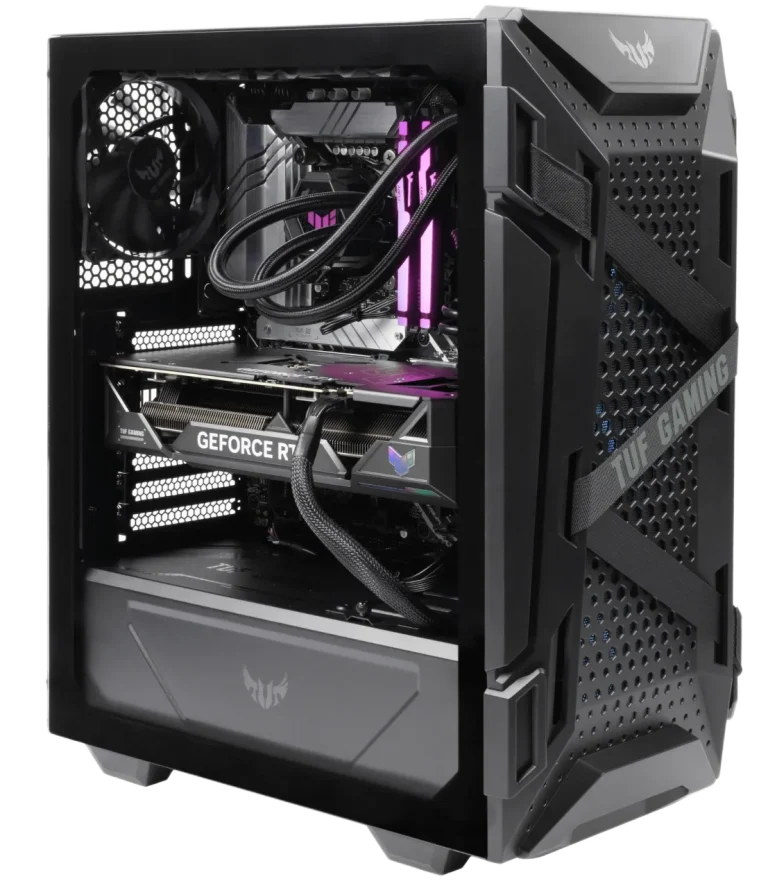
Bottom line The right choice for buyers who need DLSS 4 MFG, heavy RT workloads, or content creation tools that leverage Tensor core acceleration, and can absorb the premium.
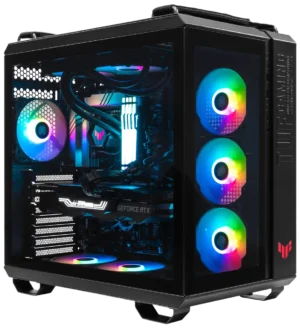
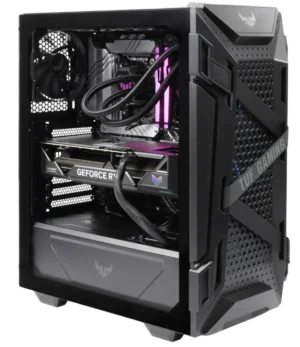
TUF Gaming GT301, GeForce RTX 5070 Ti 16GB, Intel Ultra 9 285K

Top-Tier Intel + RTX 5070 Ti

TUF Gaming GT301, GeForce RTX 5070 Ti 16GB, Intel Ultra 9 285K, DDR5 64GB, 2 TB NVMe SSD, Gaming PC

$3,734.00
See details
View Pros & Cons
The good
  • Intel Ultra 9 285K is a current-gen flagship CPU with strong multi-threaded performance
  • RTX 5070 Ti with full DLSS 4 and RT hardware advantage
  • 64GB DDR5 makes this a capable dual-purpose gaming and workstation build
  • TUF Gaming GT301 chassis is well-regarded for thermal management
The trade-offs
  • Highest price point in this comparison, premium over RX 9070 XT builds is substantial
  • Intel platform offers less gaming-specific cache advantage vs. AMD 3D V-Cache CPUs
  • Overkill for buyers whose library is raster-only and doesn’t leverage RT or MFG
Bottom line Best for power users who want Nvidia’s full Blackwell feature set paired with Intel’s latest flagship, a premium all-rounder for gaming and creative workloads.

Specs Side by Side

RX 9070 XT and RTX 5070 Ti graphics cards side by side on a dark background showing heatsink and PCB design
Both cards share more common ground than their price gap suggests. Each uses a 256-bit memory bus, carries 16GB of VRAM, and is fabbed on TSMC’s N4P node, a refined 5nm-class process. The differences show up in memory type, raw compute, and architecture-specific feature sets.

Architecture and Compute

The RX 9070 XT is built on AMD’s RDNA 4 architecture using the Navi 48 die. It has 64 Compute Units, 4,096 stream processors, and a boost clock of up to 2,970 MHz. AMD rates its FP32 throughput at 48.7 TFLOPS, which is the higher raw compute figure between these two cards. It also carries 64 third-generation ray tracing accelerators and 128 second-generation AI accelerators, with AMD claiming 2x the ray tracing throughput per CU compared to RDNA 3, though that does not translate directly to doubled real-world RT performance. The RTX 5070 Ti uses Nvidia’s Blackwell architecture on the GB203 die, the same silicon as the RTX 5080 but with 17% fewer SMs active. It ships with 8,960 CUDA cores, 70 RT cores, and 280 Tensor cores. No sourced FP32 figure is available for direct comparison in the data reviewed here.

Memory and Bandwidth

This is where the two cards diverge most sharply. The 9070 XT uses GDDR6 running at 20 Gbps, delivering 640 GB/s of bandwidth. The RTX 5070 Ti uses GDDR7 at 28 Gbps, reaching 896 GB/s. That is a 40% bandwidth advantage for the 5070 Ti on paper. Both cards carry 16GB of VRAM, which puts them at parity for texture-heavy workloads and future 4K titles that push beyond 12GB.

Spec Table

Spec

RX 9070 XT

$599 MSRP

Winner

RTX 5070 Ti

$749 MSRP

Architecture
RDNA 4 (Navi 48)
Blackwell (GB203)
Process Node
TSMC N4P
TSMC N4P
Shaders / CUDA Cores
4,096 SPs (64 CUs)
8,960 CUDA cores
RT Cores / Accelerators
64 (3rd-gen)
70 RT cores
AI Accelerators
128 (2nd-gen)
280 Tensor cores
Boost Clock
2,970 MHz
See AIB specs
FP32 Compute
48.7 TFLOPS
Not available in reviewed sources
VRAM
16GB GDDR6
16GB GDDR7
Memory Bus
256-bit
256-bit
Memory Bandwidth
640 GB/s
896 GB/s
TDP
304W TBP
300W
TDP is effectively a wash at 304W versus 300W. Power delivery requirements for both cards are similar enough that a quality 850W PSU covers either build without adjustment.

Rasterization Performance: The Core Gaming Story

RX 9070 XT vs RTX 5070 Ti: Per-Game Performance Delta at 1440p and 4K9070 XT performance relative to 5070 Ti (negative = 5070 Ti leads, positive = 9070 XT leads)
Sources: TechSpot (2025-03-24), GamersNexus (2025-03-06). Delta = 9070 XT % difference vs 5070 Ti. Dragon's Dogma 2 4K delta derived from key_fact [17]: 9070 XT at 95% of 5070 Ti = –5%.

TechSpot’s 55-game benchmark suite puts the average gap at 5% in favor of the RTX 5070 Ti across both 1440p and 4K. That headline number tells most of the story. In 36 of those 55 games, the margin between the two cards was 10% or less in either direction, meaning 65% of tested titles are essentially a coin flip between the two GPUs at a practical level. GamersNexus corroborates this at 4K rasterization, finding the two cards within 6% of each other in F1, Cyberpunk 2077, Resident Evil 4, Starfield, Total War: Warhammer 3, and Dragon’s Dogma 2. For RX 9070 XT vs RTX 5070 Ti 1440p performance specifically, the competitive picture is similar: the 9070 XT holds its ground in the majority of modern titles.
65%

of tested titles are a practical coin flip

In 36 of TechSpot’s 55-game benchmark suite, the margin between the RX 9070 XT and RTX 5070 Ti was 10% or less in either direction, meaning nearly two-thirds of games produce no meaningful real-world difference between the two GPUs.

Where the 5070 Ti Pulls Ahead

Two titles stand out as genuine outliers for Nvidia. In Final Fantasy XIV at 1440p, the 5070 Ti led by 34%, one of the widest margins in GamersNexus’s dataset. GTA V Enhanced showed a similar pattern: the 9070 XT trailed by 29% at 1440p and 24% at 4K per TechSpot. Both titles have histories of favoring Nvidia’s driver stack, so these gaps likely reflect optimization rather than raw hardware capability.

Where the 9070 XT Surprises

Rocket League is the most dramatic outlier in the opposite direction. TechSpot recorded the 9070 XT running 41% faster than the 5070 Ti at 1440p, a result they attribute to a GeForce driver issue rather than a genuine architectural advantage. Treat that number as a data anomaly, not a repeatable win.

Dragon’s Dogma 2: The Value Benchmark

Dragon’s Dogma 2 at 4K is the clearest illustration of the value argument. The 9070 XT delivered 95% of the 5070 Ti’s frame rate at 80% of its MSRP, per GamersNexus. That ratio, 95 cents of performance for every 80 cents spent, is the core case for the AMD card in a raster-focused build.
Most open-world and action RPG titles cluster near the Dragon’s Dogma 2 outcome, which is why the 5% average gap understates how competitive the 9070 XT actually is across a real gaming library.

Ray Tracing and Upscaling: Where the Gap Widens
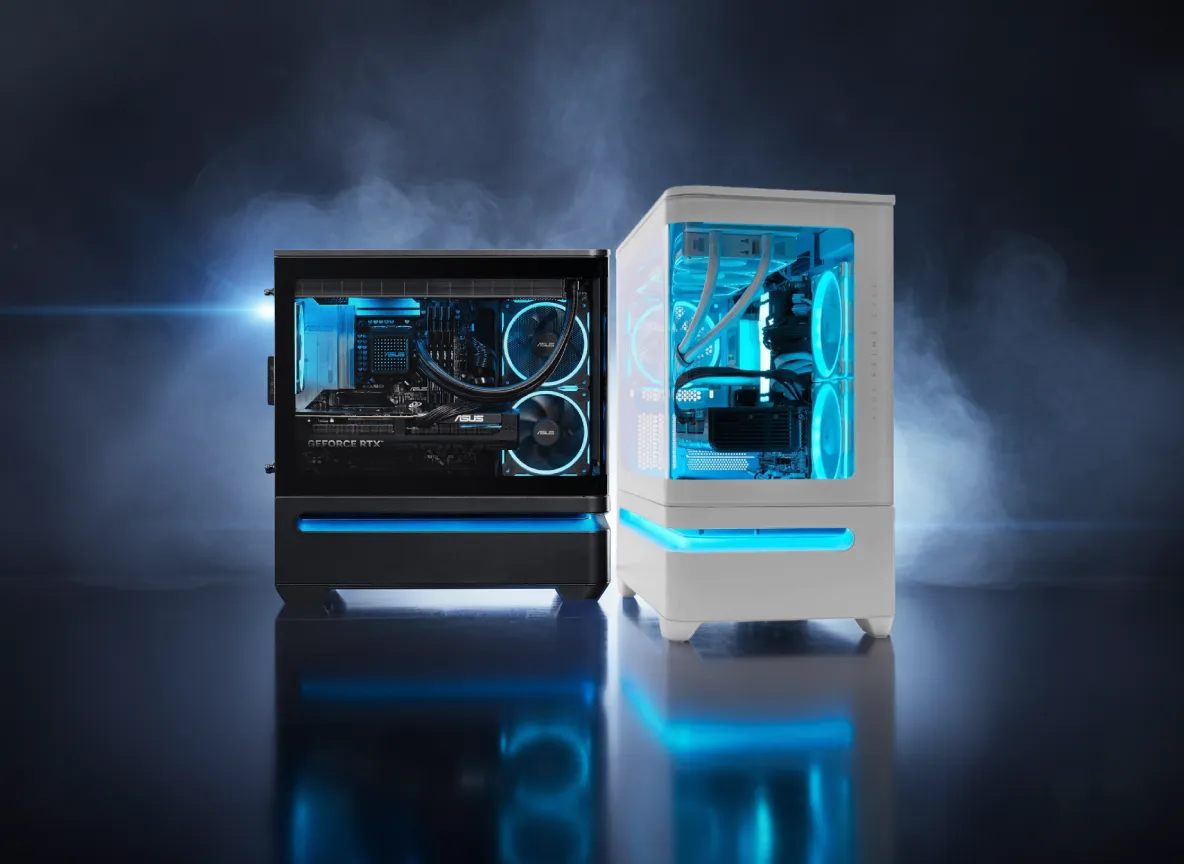
Side-by-side screenshot comparison of DLSS 4 vs FSR 4 upscaling quality in a demanding game scene
Rasterization tells one story. Ray tracing and upscaling tell another, and this is where the RTX 5070 Ti vs RX 9070 XT ray tracing benchmark results shift meaningfully in Nvidia’s favor. AMD’s RDNA 4 architecture closes the RT gap compared to RDNA 3, but it does not erase it.

Ray Tracing Performance

In Cyberpunk 2077 RT Ultra at 4K, the RTX 5070 Ti led the RX 9070 XT by approximately 23%, posting around 28 FPS against the 9070 XT’s 22 FPS, per GamersNexus. That is a meaningful gap in one of the most demanding RT workloads available. Across lighter RT scenarios the margin shrinks, but the 9070 XT’s ray tracing still trails Nvidia’s hardware in most titles. The improvement over RDNA 3 is real and worth acknowledging. The gap is much smaller than what older Radeon generations produced, according to GamersNexus. For buyers who run RT at moderate settings rather than maxed-out Ultra presets, the 9070 XT holds up reasonably well. For buyers who want to push RT to its ceiling, the 5070 Ti is the clearer choice.

DLSS 4 vs FSR 4: The Upscaling Picture

The bigger asymmetry is in upscaling. Nvidia’s DLSS 4 Multi-Frame Generation is exclusive to RTX 50-series Blackwell GPUs and has no AMD equivalent using AI hardware, per Club386. DLSS 4 MFG uses 5th-gen Tensor Cores to generate up to three AI frames between each rendered frame, per Nvidia. That multiplier effect on perceived frame rate has no counterpart on the AMD side. AMD’s answer is FSR 4, and it is a genuine step forward. FSR 4 image quality sits between DLSS 3 and DLSS 4, representing a significant leap from FSR 3, per GamersNexus. The DLSS 4 vs FSR 4 image quality comparison is no longer the lopsided contest it once was. FSR 4 is also exclusive to RX 9000 series cards at launch, so older Radeon GPUs do not benefit from the AI-based upscaling path, per Videocardz. When both cards run their respective upscalers at Quality mode, the overall performance gap narrows significantly, per TechSpot’s direct head-to-head. That context matters for real-world gaming: most players at 1440p and 4K use upscaling. The native-render gap and the upscaled gap are two different numbers, and the upscaled number is the one most buyers will actually experience.
“The 5070 Ti’s RT and MFG advantages are real, but they are most relevant to buyers who specifically target heavy ray tracing workloads or need the frame-generation multiplier. For upscaled raster gaming, the gap is smaller than the spec sheets suggest.” ArsenalPC Editorial

Power, Thermals, and Build Considerations
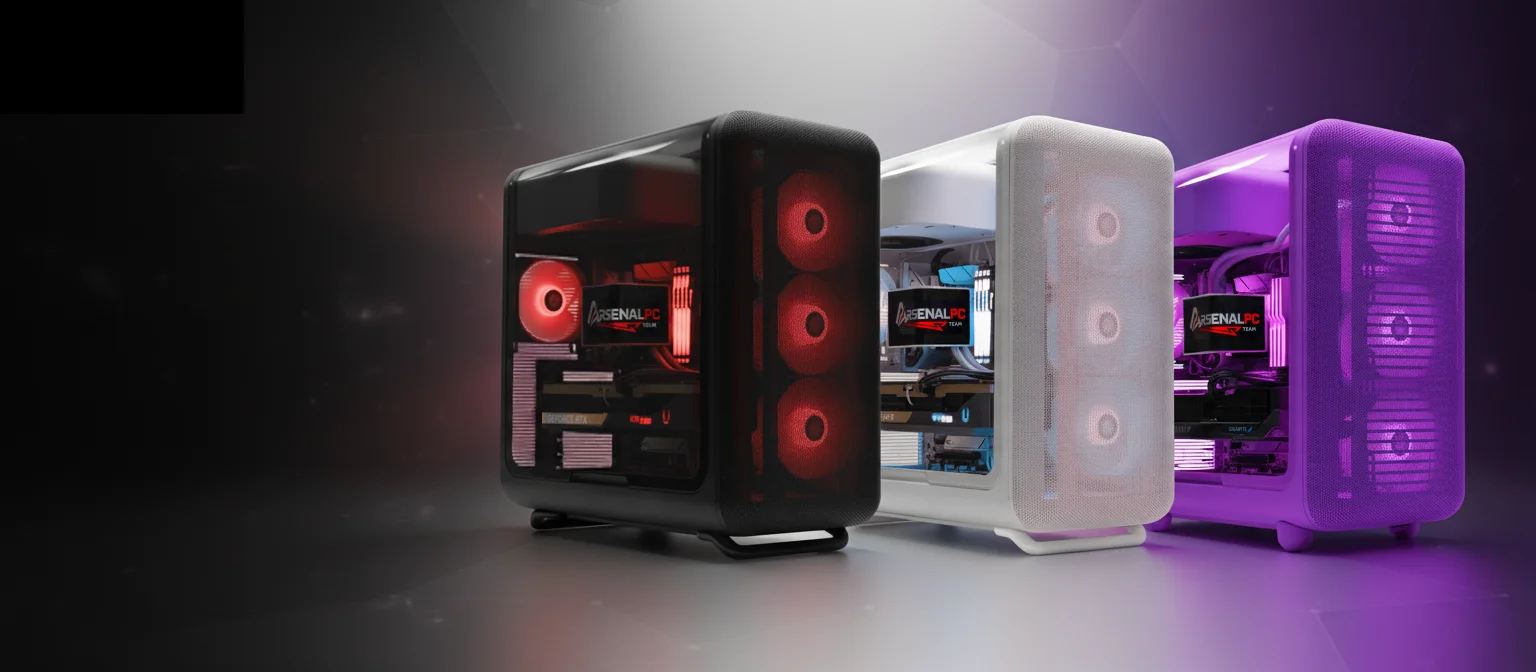
gaming PC cable management, custom ArsenalPC build with expert cable routing in Willoughby Ohio
From a system-building standpoint, these two GPUs are closer than their price gap suggests. AMD rates the RX 9070 XT at 304W TBP and Nvidia rates the RTX 5070 Ti at 300W TDP, putting both cards in the same thermal and electrical bracket. That near-identical power envelope means your PSU spec, case selection, and cooling strategy are essentially the same regardless of which GPU you choose. One caveat on RX 9070 XT power consumption and build requirements: AMD’s 304W TBP is a rated ceiling, not a hard cap. Real-world testing from GamersNexus shows the 9070 XT can exceed that figure under sustained load, depending on the AIB partner’s power limit tuning. Budget headroom accordingly rather than sizing a PSU to the exact rated number.

PSU and Case Guidance

An 850W power supply is the practical minimum for either card paired with a modern high-core-count CPU. A 1000W unit gives comfortable headroom for overclocking, multi-drive storage arrays, or future component swaps. Both GPUs are distributed exclusively through AIB partners, so cooler size and connector layout vary by brand. Verify your case supports the card length before ordering. Airflow matters more at 300W than it did in the mid-range tier two generations ago. A case with at least two front intake fans and one rear exhaust keeps GPU junction temperatures in check. Restricted airflow does not just raise temperatures; it triggers power throttling on both architectures, which costs measurable frame rates in sustained workloads.

Process Node and Long-Term Efficiency

Both GPUs are built on TSMC’s N4P node, a refined 5nm-class process. Shared silicon lineage means neither card has a fundamental efficiency advantage at the process level. Performance-per-watt differences between the two come down to architecture and driver tuning, not manufacturing. For a boutique build, the practical takeaway is straightforward. Spec an 850W to 1000W PSU, choose a case with strong front-to-rear airflow, and confirm AIB cooler dimensions fit your chassis. Neither card demands anything exotic from the platform.

Price, Value, and the Prebuilt Angle

GPU MSRP Tier Positioning: Where the 9070 XT and 5070 Ti SitLaunch MSRPs across the current GPU landscape — highlighting the $150 gap between the 9070 XT and 5070 Ti
Sources: Tom's Hardware, GamersNexus. MSRPs reflect launch pricing; AIB partner cards may vary.

The RX 9070 XT launched at $599 MSRP versus $749 for the RTX 5070 Ti, a $150 spread that represents roughly 15 to 20 percent better value per dollar for the AMD card at list price. For a raster-focused buyer, that gap is hard to justify when the performance delta across a broad game suite sits around 5 percent. The 5070 Ti’s $749 MSRP is already $50 lower than the $799 RTX 4070 Ti Super it replaced, so Nvidia did move in the right direction on paper. The real-world picture at launch was less favorable. The 5070 Ti launched with no Founders Edition, meaning every unit on shelves came from AIB partners at their own pricing. That structure contributed to significant launch-day price inflation above MSRP, pushing the effective cost of many 5070 Ti cards well past the $749 baseline. Buyers hunting the best GPU for 4K gaming under $750 found the 5070 Ti largely out of reach at launch, while 9070 XT cards were more consistently available near list price.

What the Gap Means in a Prebuilt System

For prebuilt buyers, the math compounds. A builder sourcing a 5070 Ti at above-MSRP AIB pricing passes that cost upstream into the configured system price. An RTX 5070 Ti prebuilt system will carry a meaningful premium over an equivalent RX 9070 XT prebuilt gaming PC, even before accounting for any margin differences. The performance you receive in most titles does not scale with that premium. Common prebuilt pairings for both GPUs center on the Ryzen 7 9800X3D, 32GB DDR5, and a 1 to 2TB NVMe SSD. That platform is well matched to either card and leaves no CPU bottleneck at 4K. Choosing the 9070 XT in that configuration frees budget for a larger SSD, a higher-refresh display, or simply a lower total system price.
  • Ryzen 7 9800X3D: strong 3D V-Cache pairing for both GPUs at 1440p and 4K
  • 32GB DDR5: sufficient headroom for current titles and near-term releases
  • 1 to 2TB NVMe SSD: standard tier for a complete gaming build
AMD has reported strong commercial momentum for the 9070 XT. In its Q1 2025 earnings release, AMD described the card as a standout product, and secondary reports attributed a claim of roughly 10x sales growth versus the prior generation to AMD’s CEO. That figure has not been independently verified from a primary transcript, so treat it as directional rather than precise. Even so, broad availability and competitive supply have kept 9070 XT pricing closer to MSRP than the 5070 Ti managed at launch, which matters for anyone configuring a system today.
TUF Gaming GT301, GeForce RTX 5070 Ti 16GB, Intel Ultra 9 285K, DDR5 64GB, 2 TB NVMe SSD, Gaming PC

Prebuilt Gaming PCs

TUF Gaming GT301, GeForce RTX 5070 Ti 16GB, Intel Ultra 9 285K, DDR5 64GB, 2 TB NVMe SSD, Gaming PC

$3,734.00
View build →
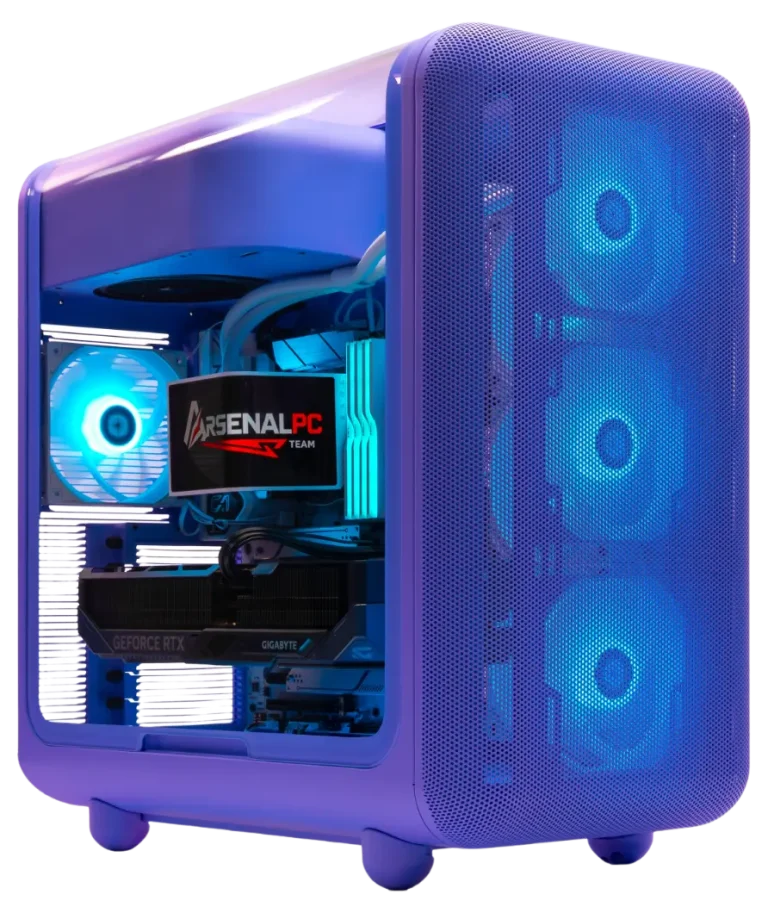
HYTE X50 Purple, Radeon RX 9070 XT 16GB, Ryzen 9 9900X3D, DDR5 64GB, 4TB NVMe SSD, Gaming PC

Prebuilt Gaming PCs

HYTE X50 Purple, Radeon RX 9070 XT 16GB, Ryzen 9 9900X3D, DDR5 64GB, 4TB NVMe SSD, Gaming PC

$3,948.00
View build →
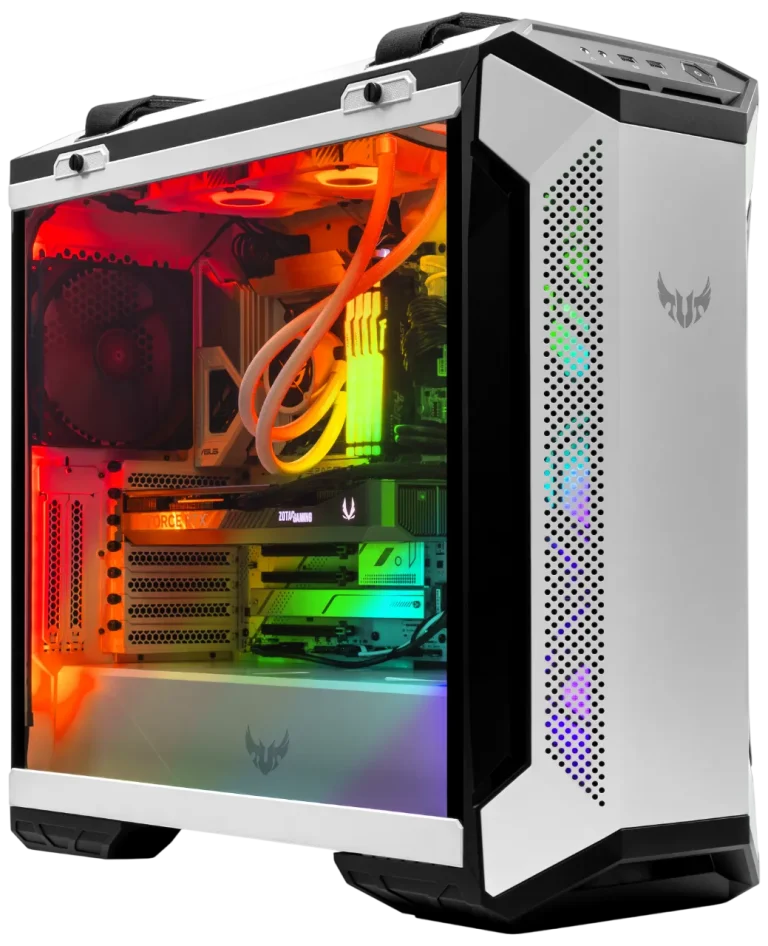
TUF Gaming GT501 White, Radeon RX 9070 XT 16GB, Ryzen 7 7800X3D, DDR5 32GB, 2 TB NVMe SSD, Gaming PC

Prebuilt Gaming PCs

TUF Gaming GT501 White, Radeon RX 9070 XT 16GB, Ryzen 7 7800X3D, DDR5 32GB, 2 TB NVMe SSD, Gaming PC

$3,090.00
View build →
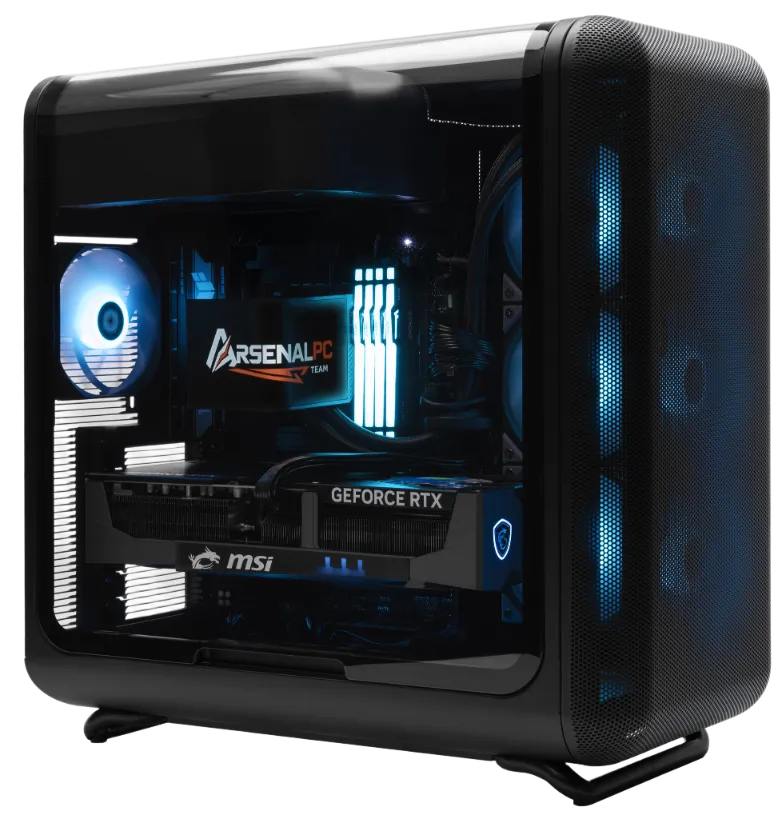
HYTE X50, GeForce RTX 5090 32GB, Ryzen 9 9950X3D, DDR5 32GB, 8TB NVMe SSD (2x4TB RAID), 8TB HDD, Gaming PC

Prebuilt Gaming PCs

HYTE X50, GeForce RTX 5090 32GB, Ryzen 9 9950X3D, DDR5 32GB, 8TB NVMe SSD (2x4TB RAID), 8TB HDD, Gaming PC

$8,204.00
View build →
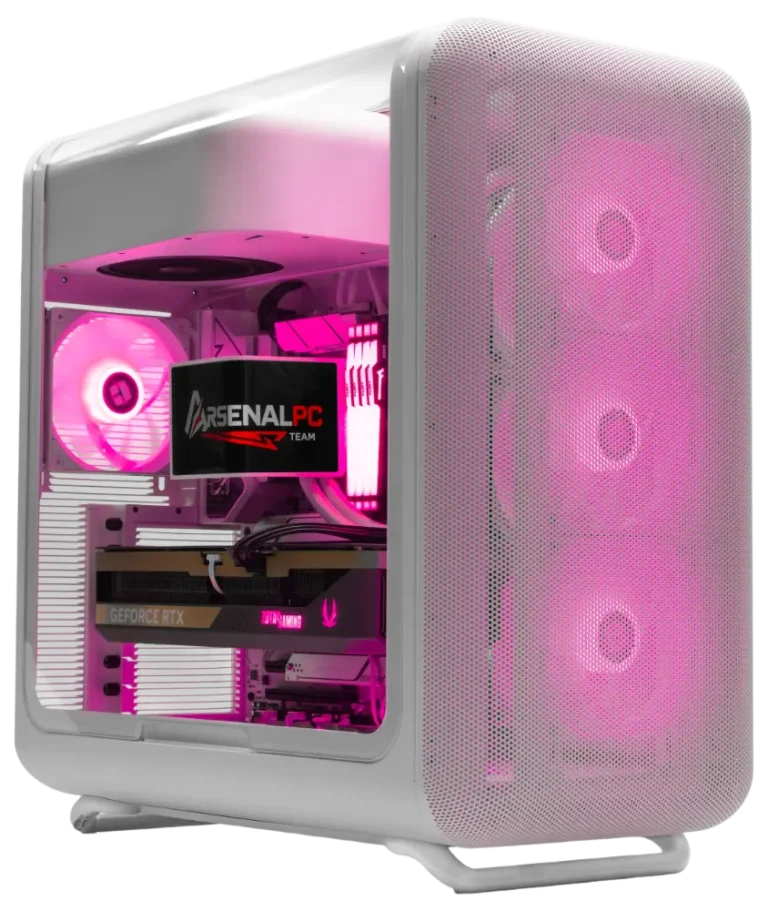
HYTE X50 White, GeForce RTX 5060 TI 8GB, Intel i9-12900KF, DDR5 32GB, 2TB NVMe SSD, 2TB HDD, Gaming PC

Prebuilt Gaming PCs

HYTE X50 White, GeForce RTX 5060 TI 8GB, Intel i9-12900KF, DDR5 32GB, 2TB NVMe SSD, 2TB HDD, Gaming PC

$2,601.00

View build →
MasterBox TD500 Mesh White, GeForce RTX 5070 12GB, Intel i9-14900KF, DDR5 32GB, 1 TB NVMe SSD, Gaming PC

Prebuilt Gaming PCs

MasterBox TD500 Mesh White, GeForce RTX 5070 12GB, Intel i9-14900KF, DDR5 32GB, 1 TB NVMe SSD, Gaming PC

$2,639.00

View build →

Who Should Choose Which GPU

RX 9070 XT vs RTX 5070 Ti: Multi-Dimensional ComparisonSix-axis holistic comparison across rasterization, ray tracing, upscaling, bandwidth, value, and availability
Sources: TechSpot, GamersNexus, AMD, Nvidia, Tom's Hardware. Radar scores are index values derived strictly from cited benchmark deltas and spec figures — not fabricated ratings.

Across 55 games tested by TechSpot, the RX 9070 XT averaged 5% slower than the RTX 5070 Ti at both 1440p and 4K. In 36 of those 55 games, the margin was 10% or less in either direction. That data shapes the decision cleanly: most buyers will not feel the gap, but specific use cases push one card clearly ahead of the other.
Buy the RX 9070 XT if…
High-refresh 1440p raster gaming The 9070 XT trades within a few percent of the 5070 Ti across the majority of titles, and the $150 MSRP difference buys real headroom elsewhere in a build.
Open-world and esports library In Rocket League, the 9070 XT was 41% faster than the 5070 Ti at 1440p, though TechSpot attributes that gap to a GeForce driver issue. AMD-optimized titles consistently favor this card.
FSR 4 upscaling meets your needs GamersNexus places FSR 4 quality between DLSS 3 and DLSS 4, a significant step up from FSR 3 and a credible upscaling solution for most gaming workloads.
Value per dollar is the primary filter The performance delta does not justify the price delta for raster-focused buyers.
Buy the RTX 5070 Ti if…
Ray tracing is a priority Nvidia’s RT hardware advantage is consistent across titles, and the 5070 Ti widens its lead meaningfully in RT-heavy scenarios like Cyberpunk 2077 RT Ultra at 4K.
DLSS 4 Multi-Frame Generation matters MFG is exclusive to RTX 50-series Blackwell GPUs and has no AMD equivalent using AI hardware. If frame generation at that fidelity level matters, the 5070 Ti is the only option.
Nvidia-optimized game library In Final Fantasy XIV at 1440p, the 5070 Ti led by 34% per GamersNexus. In GTA V Enhanced, the gap was 29% at 1440p and 24% at 4K. Those are not marginal differences.
Content creation with Tensor core acceleration Nvidia’s AI-accelerated tooling in video encoding, noise reduction, and creative applications adds value beyond gaming frame rates.

ArsenalPC Verdict

For raster-focused buyers, the RX 9070 XT is the stronger value, 5% less performance for 20% less spend is a trade most gamers should take.

ArsenalPC configures systems around both GPUs. If your library skews toward RT, MFG, or Nvidia-optimized titles, the 5070 Ti earns its premium. For everyone else, the 9070 XT is the more sensible foundation for a 1440p or 4K build.

Frequently Asked Questions

On paper, the RTX 5070 Ti’s GDDR7 delivers 896 GB/s versus the RX 9070 XT’s 640 GB/s from GDDR6, a 40% bandwidth advantage. In practice, that gap does not translate into a 40% frame rate lead. Both cards share a 256-bit bus and carry 16GB of VRAM, and the 9070 XT’s higher FP32 throughput of 48.7 TFLOPS partially offsets the bandwidth deficit. Across TechSpot’s 55-game suite, the average raster gap is just 5%, suggesting that most current titles are not bandwidth-starved enough for the GDDR7 advantage to dominate real-world results.
FSR 4 is exclusive to RX 9000 series cards at launch. Unlike FSR 3, which ran on a broad range of hardware including non-AMD GPUs, FSR 4 relies on the second-generation AI accelerators built into RDNA 4. Owners of RX 6000 or RX 7000 series cards do not get the AI-based upscaling path that FSR 4 provides. If you are upgrading from an older Radeon card specifically to access FSR 4’s improved image quality, the RX 9070 XT is currently the entry point for that feature set.
DLSS 4 Multi-Frame Generation generates up to three AI frames between each rendered frame, which can dramatically multiply perceived frame rates in supported titles. Whether that justifies $150 depends on your library and monitor. If you play a handful of DLSS 4 MFG-supported games at high refresh rates and your base frame rate is already above 60 FPS, the multiplier effect is genuinely impactful. If most of your library is raster-only or uses neither upscaler heavily, you are paying for a feature you will rarely trigger, and the 9070 XT’s value case strengthens considerably.
The RTX 5070 Ti launched at $749 MSRP, which is $50 less than the RTX 4070 Ti Super’s $799 launch price. That makes it a modest generational price improvement on paper. The 5070 Ti uses Nvidia’s Blackwell architecture on the GB203 die with 8,960 CUDA cores and GDDR7 memory, representing a meaningful architectural step over the Ada Lovelace generation. Buyers upgrading from a 4070 Ti Super will see performance gains alongside the new DLSS 4 MFG capability, though the practical frame rate uplift in raster workloads varies significantly by title.
A 750W PSU is technically within range for either card paired with a mid-range CPU, but it leaves very little headroom. The RX 9070 XT is rated at 304W TBP and the RTX 5070 Ti at 300W TDP, and real-world testing shows the 9070 XT can exceed its rated ceiling under sustained load depending on AIB power limit tuning. Paired with a Ryzen 7 9800X3D drawing up to 120W under gaming load, total system draw can approach or exceed 500W. An 850W unit is the practical minimum for a comfortable safety margin, and a 1000W unit is recommended if you plan to overclock or add multiple storage drives.
The 9070 XT does not hold a broad genre-level advantage over the 5070 Ti in rasterization, but it performs competitively in open-world action RPGs and modern AAA titles that are not specifically optimized for Nvidia’s driver stack. Dragon’s Dogma 2 at 4K is a clear example, where the 9070 XT delivered 95% of the 5070 Ti’s frame rate at 80% of its MSRP. The 5070 Ti’s most consistent leads appear in titles with long histories of Nvidia driver optimization, such as Final Fantasy XIV, where the gap reached 34% at 1440p, and GTA V Enhanced, where it reached 29% at 1440p.
Yes, the RX 9070 XT includes 64 third-generation ray tracing accelerators built into the RDNA 4 architecture. AMD’s official documentation states these deliver 2x the ray tracing throughput per compute unit compared to RDNA 3, though AMD itself notes that doubled throughput does not translate directly to doubled real-world performance. In practice, the gap between the 9070 XT and the RTX 5070 Ti in RT workloads is meaningfully smaller than what RDNA 3 cards produced, but it persists. In Cyberpunk 2077 RT Ultra at 4K, the 5070 Ti led by approximately 23%, which is a tangible difference for buyers who prioritize maxed-out ray tracing settings.
In most cases, yes. Prebuilts configured around the AM5 platform with a Ryzen 7 9800X3D or similar CPU use a standard PCIe x16 slot, meaning a future RDNA 5 or later GPU can drop in without a motherboard change, provided the PSU and case accommodate the new card’s power and physical dimensions. The AM5 socket has a confirmed roadmap through at least 2027, giving the platform meaningful longevity. The main constraints are PSU wattage headroom and case clearance for next-generation AIB cooler designs, both of which are worth confirming before purchasing a prebuilt you intend to upgrade incrementally.

Need Help Choosing the Right PC?

ArsenalPC is based in Willoughby, Ohio with 27+ years of custom build experience. Every system is hand-assembled, tested under load, and backed by our in-house support team. Whether you’re leaning toward the RX 9070 XT or the RTX 5070 Ti, we can configure the right prebuilt or custom system for your budget and workload.
  • Phone: 866-277-3627 (Toll-Free) | 440-602-7090 (Local)
  • Email: Contact Form
  • Visit: 4711 E355 St, Willoughby, OH 44094
  • Hours: Mon-Fri 10AM-6PM, Sat 11AM-3PM

Talk to a Build Expert →
Leave a Reply

Your email address will not be published. Required fields are marked *