
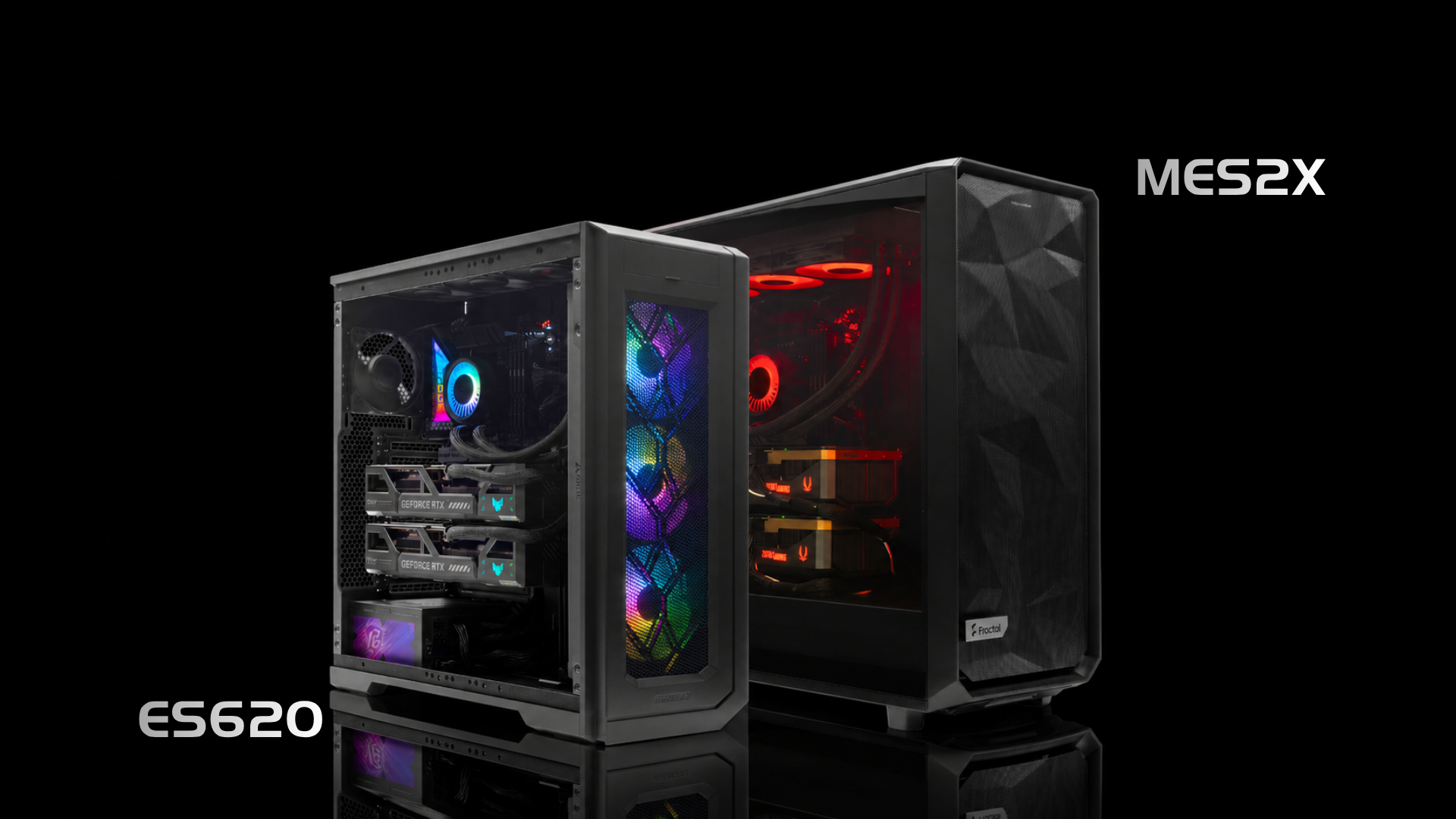

What Is a Prebuilt Gaming PC (and Who Should Buy One)
A prebuilt gaming PC is a complete system that a manufacturer or boutique shop assembles and tests before it ships. The alternative is DIY: you source every component, assemble the machine yourself and fix whatever goes wrong.
With a prebuilt, you’re paying for more than the parts. Warranty service, professional assembly and post-sale support are built into the premium over a DIY build. If a component fails, you contact one company instead of chasing separate warranties from the GPU maker and the motherboard brand. The system also ships stress-tested, with the cables already managed.
A prebuilt suits you if you want a PC that works out of the box. It’s also a more reliable way to get an RTX 5080, because standalone cards sold out in seconds at launch.
Prebuilt Gaming PC Tiers: Budget, Mid-Range, and High-End
Your monitor decides which tier you need. If you match the tier to your resolution and refresh rate, you won’t overspend, and you won’t buy hardware that holds your monitor back.
What Each Tier Delivers
- Budget (under $1,000): Targets 1080p gaming. Expect entry-level discrete GPUs and 16GB RAM.
- Mid-range ($1,000 to $2,000): Targets 1440p gaming. PC Gamer names $1,000 to $1,500 as the sweet spot for a new gaming PC.
- High-end ($2,000 and above): Built for 4K gaming, high-refresh 1440p, and demanding creative and streaming workloads. This is where RTX 5080 configurations live.
Cheap Gaming PCs: What You Actually Get Under $1,200
Budget prebuilts run from $600 to $1,200, so this price range overlaps the low end of mid-range. Most pair a Ryzen 5 or Core i5-class processor with an RTX 5060 or RTX 3050-tier GPU. Tom’s Hardware tested the CyberPowerPC Gamer Xtreme at $1,099.99 with an Intel Core Ultra 5 225F and RTX 5060. It’s a capable 1080p machine.
Check that the case, power supply, and motherboard can take a GPU or RAM upgrade in two to three years. If they can’t, today’s savings become a full replacement cost later.
The RTX 5080 Prebuilt: NVIDIA Blackwell in a Ready-to-Ship System
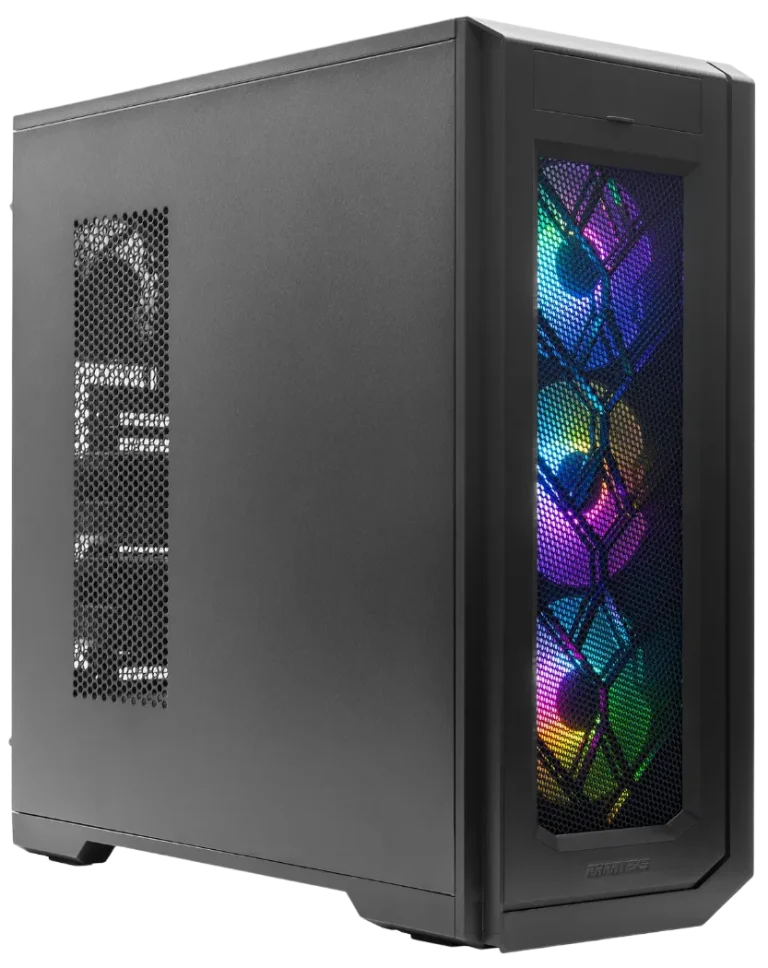
The RTX 5080 launched on January 30, 2025. Launch prebuilts started around $2,300 and reached $5,050 for the Alienware Area-51. Our pick below is a dual-GPU workstation built for AI and creative work. A gaming build needs only one RTX 5080, so it costs far less.

AI Workstations
Enthoo Pro 2 Server Edition Custom AI Workstation: Dual RTX 5080 GPUs, DDR5 128GB, Ryzen 9 9950X3D 16C 4.3GHz, 1TB NVMe SSD
The good
- Dual RTX 5080 GPUs
- 128GB DDR5 memory
- 16-core Ryzen 9 9950X3D
The trade-offs
- $7,262 exceeds gaming budgets
- Only 1TB NVMe SSD
The RTX 5080’s core specs:
- Process: TSMC 5nm
- CUDA cores: 10,752
- Memory: 16GB GDDR7 on a 256-bit bus, 960 GB/s bandwidth
- TDP: 360W
Fourth-generation RT cores and fifth-generation Tensor cores enable DLSS 4 Multi-Frame Generation, which can generate up to three extra frames between rendered frames. Tom’s Hardware data puts the card at roughly 90% of RTX 4090 raw speed.
Many launch builds paired the card with a Ryzen 7 9800X3D and a 2TB NVMe SSD.
RTX 5080 vs. RTX 4080: Is the Upgrade Worth It for a New Build?
In rasterized gaming without DLSS, the RTX 5080 holds only a 2.5% average lead over the RTX 4080 and 4080 Super. That’s too small a gain to justify pulling apart a working system. If you already own an RTX 4080 Super, keep it.
For a new build, the 5080’s $999 MSRP matches the 4080 Super’s $1,000 and is $200 below the original 4080’s $1,200. At the same price, we’d choose the 5080 for a new build. In one GamersNexus test, Final Fantasy XIV at 4K, it also posted better FPS-per-watt than the RTX 4080 Super and the RTX 5090.
Water Cooling in a Prebuilt Gaming PC: AIO vs. Air
When an RTX 5080 works hard, its heat raises the temperature of the whole case. Warmer case air can cut the CPU’s sustained clocks. That’s why AIOs appear in virtually every system integrator’s high-end RTX 5080 lineup instead of tower air coolers.
Why AIOs Dominate at This Tier
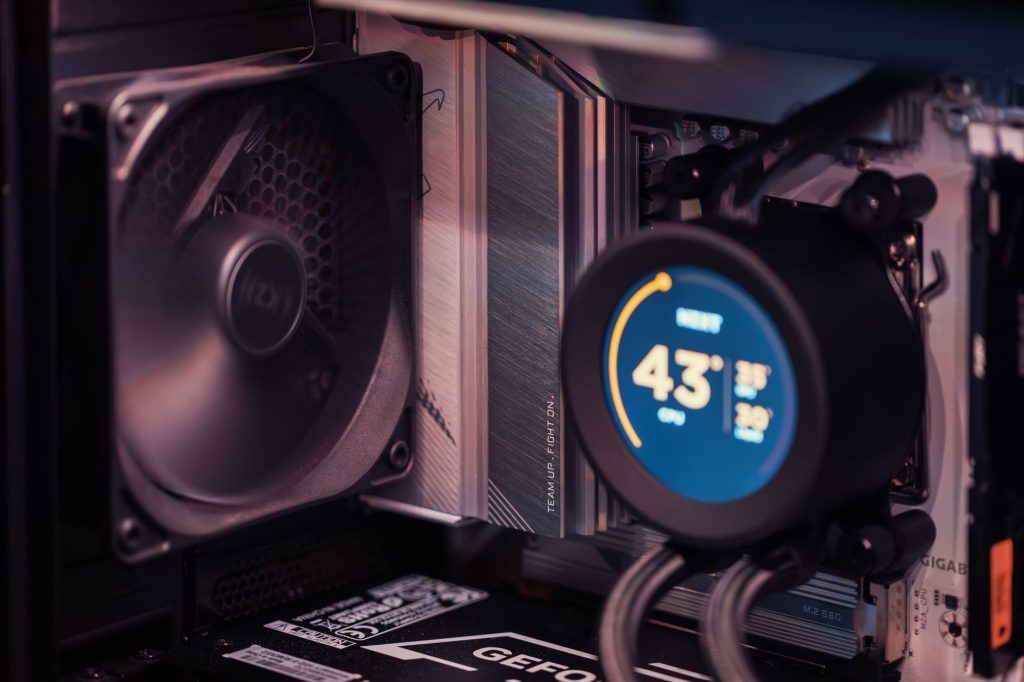
An AIO is a self-contained loop: pump, cold plate, tubing, and radiator in one sealed unit. There’s no reservoir to top off and no custom loop to bleed. Leak risk is low, and maintenance after installation is minimal. Under extreme loads, AIOs run about 4 to 5 degrees Celsius cooler than air. Radiator fans also spin at lower RPM than heatsink fans, so the system is quieter at load.
Most AIO warranties run 3 to 5 years. If the pump fails, you replace the whole unit.
Where Premium Air Cooling Still Makes Sense
The Noctua NH-D15 can dissipate 228 to 237W of heat, which matches some 360mm AIOs for most gaming workloads. We’d consider premium air for a lower-wattage gaming CPU like the 9800X3D. It fits best in a high-airflow case with a GPU below the 5080 tier. With an RTX 5080, we’d stick with the 360mm AIO for the case-heat reason above.
Custom Loop vs. AIO: When Does Full Water Cooling Make Sense?
A custom loop can put both the CPU and GPU on the same coolant circuit, and it gives the best thermal performance in a consumer build. It also takes more expertise than an AIO. For most buyers, a 360mm AIO keeps the CPU cool in an RTX 5080 system, and the GPU keeps its own cooler.
Choose a custom loop if you
- Run sustained heavy workloads
- Hit GPU thermal limits
Stick with a 360mm AIO if you
- Mostly game in shorter sessions
- Find the stock GPU cooler keeps up
A prebuilt custom loop saves you the assembly work, but you still have to maintain the open loop yourself.
How to Choose the Right Prebuilt Gaming PC for Your Budget
Price alone won’t tell you which tier a prebuilt is in, so check the GPU first.
High-end RTX 5080 build
For 4K/144Hz or 1440p/240Hz monitors. Origin PC lists a 9800X3D config at $2,899.
Pick
Mid-range 1440p build
Look for a GPU a step above the RTX 5060.
1440p
Budget 1080p/144Hz build
Look for an RTX 5060-class GPU. You don’t need an RTX 5080 at this resolution.
Value
The HYTE X50, RTX 5060, Ultra 7 265KF costs $2,341 with 32GB DDR5 and 1TB NVMe, but its RTX 5060 is a 1080p card. We’d only buy it for CPU-heavy work on a 1080p display.
Core Specs to Verify Before You Buy
- RAM: 16GB is the minimum for smooth gaming in 2025. We’d get 32GB for demanding AAA titles and multitasking.
- Power supply: An 850W 80+ Gold unit is the common pairing for an RTX 5080 build.
- Storage: 2TB NVMe is the sensible minimum at the high end.
- Cooling: The listing should name the exact cooler model. In an RTX 5080 build, a 360mm AIO is the baseline because the GPU heats the whole case, even with a chip like the Ryzen 7 9800X3D.
- Warranty length and scope: Confirm whether labor, parts, and shipping are all covered, and for how long.
Boutique Configurator vs. Big-Box Prebuilt
A boutique configurator shows you the exact CPU, RAM kit and PSU brand before you order. With any prebuilt, check that the listing names actual model numbers for the RAM, PSU and motherboard. You’ll need them to diagnose a problem, claim a warranty or upgrade a single part later.
Why a Boutique Builder Matters
Boutique builders typically get larger GPU allocations than retail channels, so their systems stay easier to buy in the months after a GPU launch. If you want a new-generation card soon after release, order a complete system from a builder.
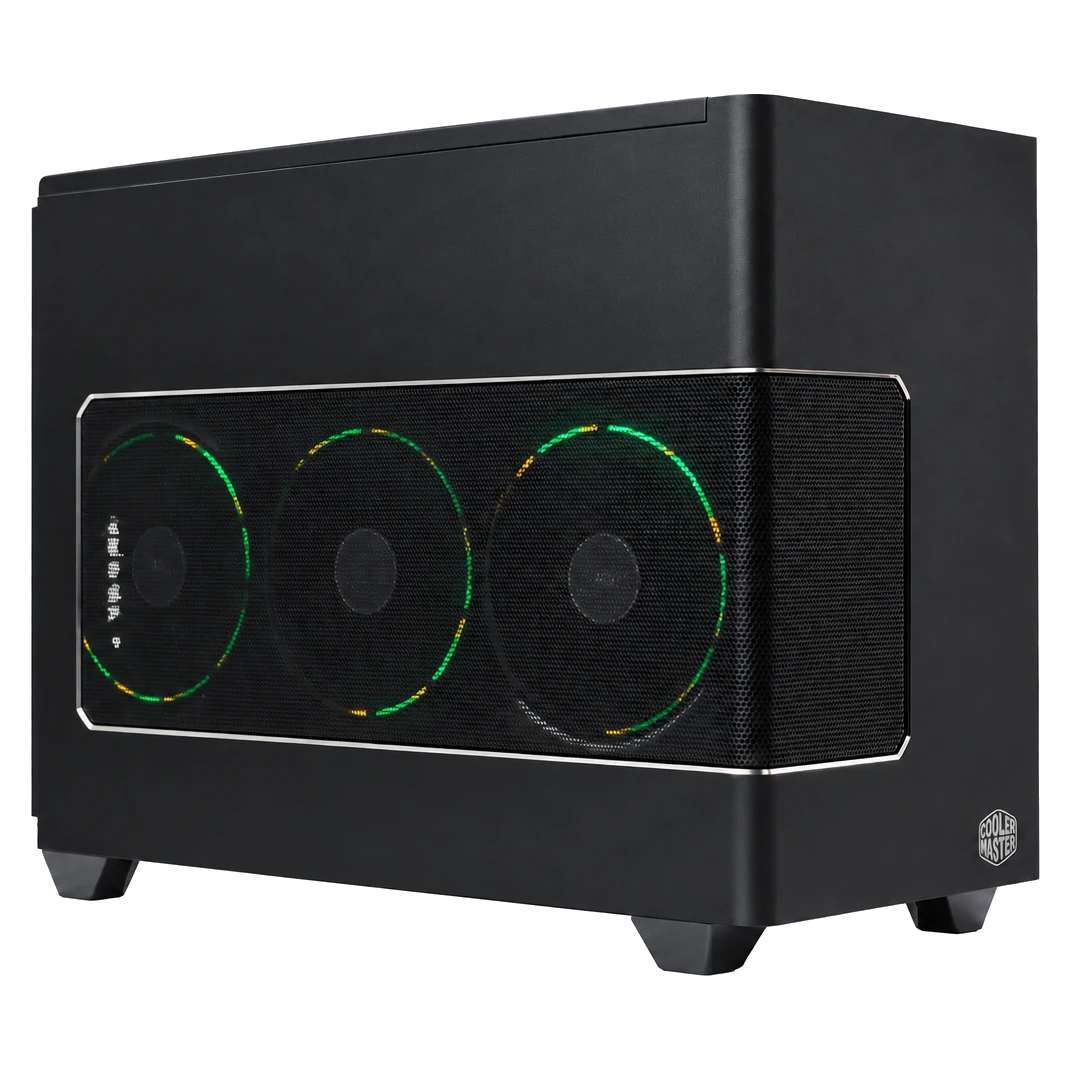
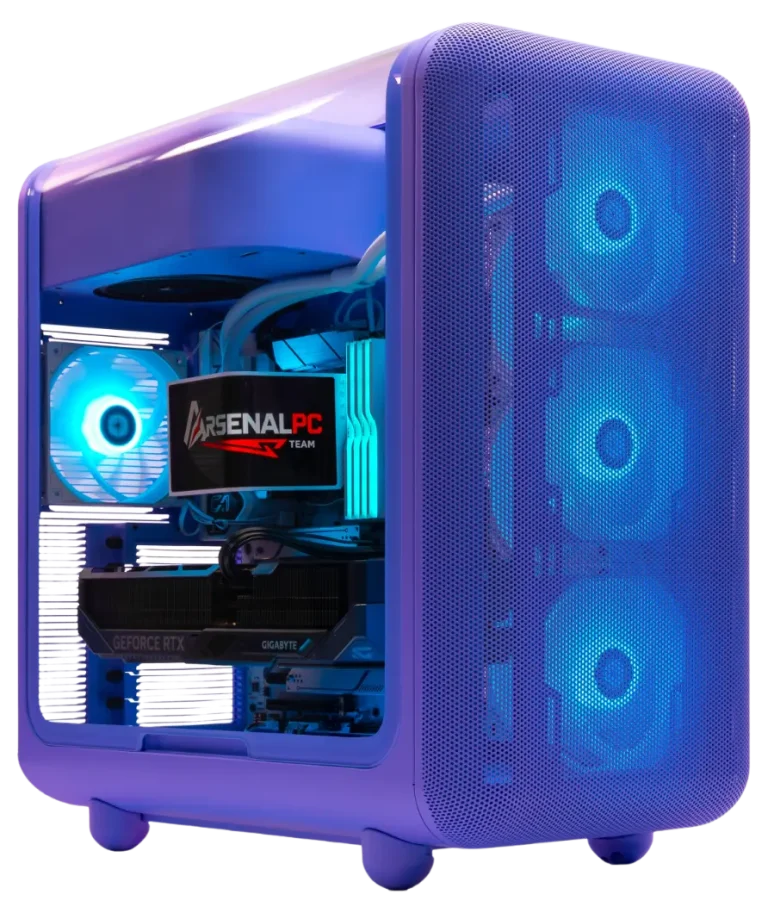
A boutique builder can also sell you a mix of parts that big-box SKUs rarely offer. The HYTE X50 below pairs 64GB of DDR5 with a 4TB NVMe SSD and a 2TB HDD, for 6TB of storage. It costs $4,290 and uses an RTX 5070 Ti with a Ryzen 9 9900X3D. We’d buy it for mixed creative work if you don’t need RTX 5080 speed.
Frequently Asked Questions
It’s only worth it if you play at 4K and want the highest frame rates. GamersNexus measured the RTX 5090 at 30% to 68.9% faster at 4K. It also draws 575W against the 5080’s 360W, so it needs a bigger PSU and stronger cooling.
Tom’s Hardware data puts the RTX 5080 at about 178.5 FPS on average at 1440p and about 133.9 FPS at 4K. Those figures measure raw speed. Multi Frame Generation can push them higher in games that support it.
Often it isn’t, because partner cards rarely sell at the $999 MSRP. AIB RTX 5080 models launched at $1,100 to $1,400 or more. DRAM shortages in early 2026 then pushed some past $1,500, which eats most of what you’d save by assembling it yourself.
We’d pick the Ryzen 7 9800X3D for a gaming build. It’s a common pairing in 2025 RTX 5080 prebuilts. Origin PC also prices its 9800X3D config $100 below its Core Ultra 7 270K version.
DLSS 4.5 adds a 6x Multi Frame Generation mode. Original DLSS 4 tops out at 4x because it generates up to three frames for each rendered frame. You’ll only see the higher multiplier in games that support it.
Need Help Choosing the Right PC?
ArsenalPC is based in Willoughby, Ohio with 27+ years of custom-build experience. Every system we ship is hand-assembled and stress-tested for a minimum of three hours before it leaves the shop, and our team is available to help you match the right configuration to your workload, display, and budget.
- Phone: 866-277-3627 (Toll-Free) | 440-602-7090 (Local)
- Email: Contact Form
- Visit: 4711 E 355th St, Willoughby, OH 44094
- Hours: Mon-Fri 10AM-6PM, Sat 11AM-3PM